
Signs of rats and mice
Six things to look for, and what each one tells you about which animal you have and how established it is.
1. Droppings
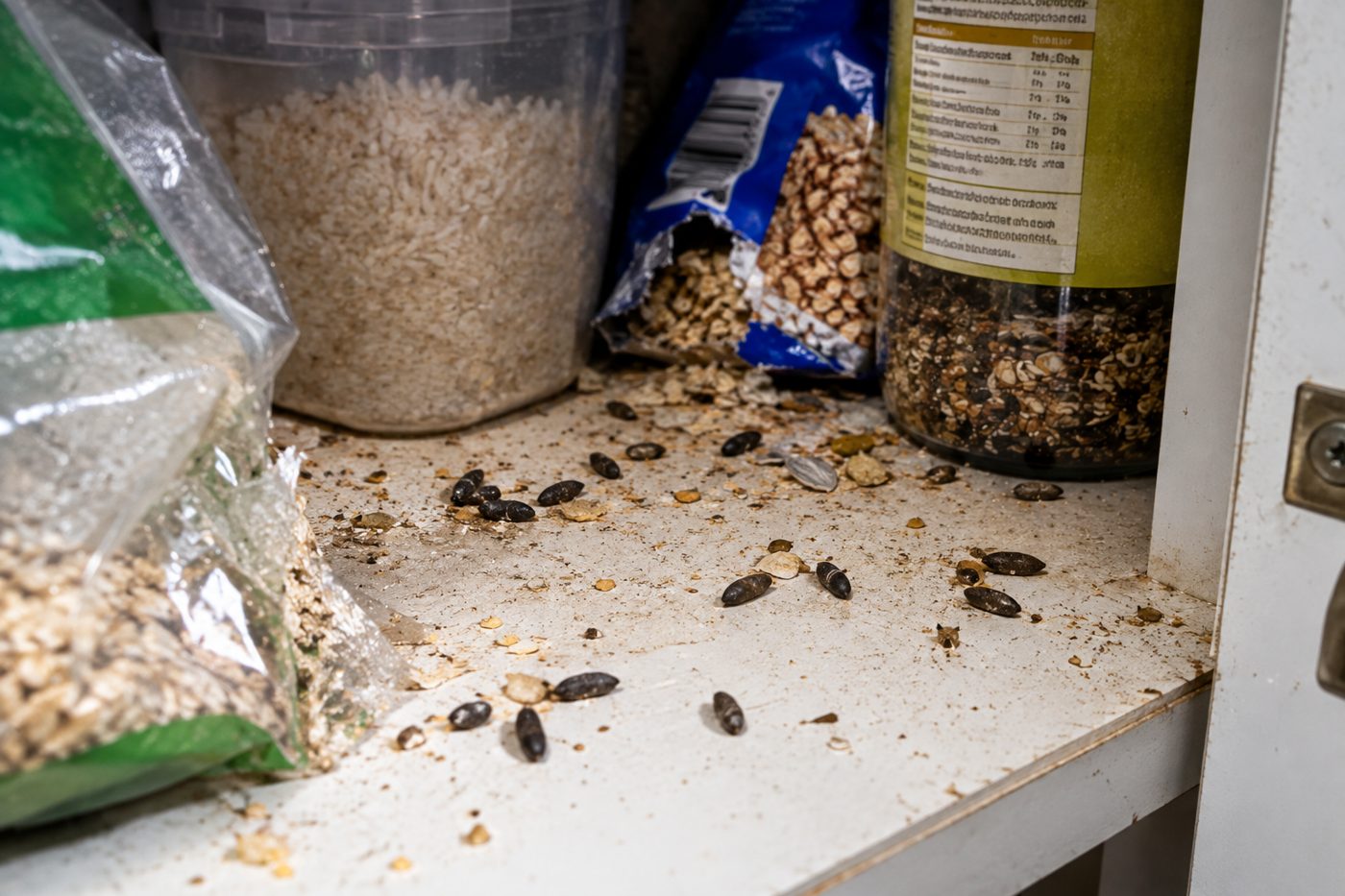
The most reliable single sign. Mouse droppings are 3–6 mm, thin and pointed, and there are usually a lot of them scattered across a small area. Rat droppings are 12–20 mm and far fewer, often grouped along a run or in a corner. Fresh droppings are dark and soft; old ones are grey, dry and crumble. Common spots: pantry shelves, under the sink, behind the fridge, on top of cupboards, in the roof void near the eaves, and along subfloor timbers.
2. Noise, and when it happens
Light, fast scurrying inside walls and cabinetry suggests mice. Heavier running, thumping and dragging across the ceiling from dusk suggests roof rats — see rats in the roof. Slow, heavy movement with loud thumps is more likely a possum. Daytime noise generally means either a heavy infestation or a different animal.
3. Smears and runs
Rats travel the same routes and leave dark greasy smear marks where their fur rubs against beams, pipes, wall junctions and the edges of access holes. A defined smear on a rafter or around a hole is a live run and is exactly where a trap should go.
4. Gnaw damage
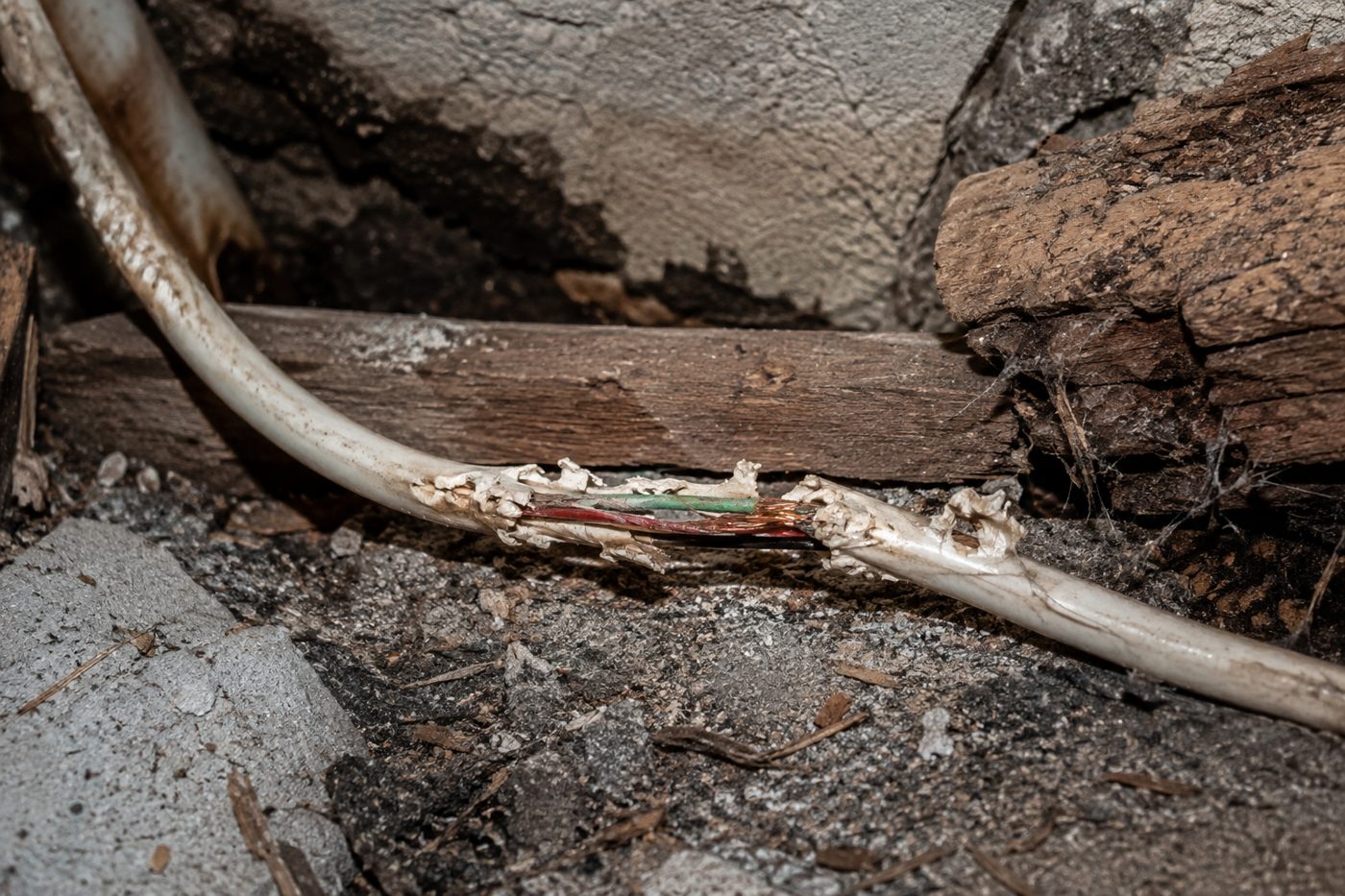
Chewed food packaging in the pantry, gnawed corners on cardboard, shredded plastic, and teeth marks on skirting, door frames, cabling and plastic pipe. Fresh gnawing is pale where the surface has been cut into; older damage darkens.
5. Smell
A persistent stale ammonia smell in a room, cupboard or near a ceiling vent points to established activity — rodents urinate constantly along runs. A sudden strong smell of decay usually means an animal has died in a cavity or roof void.
6. Nesting material and other traces
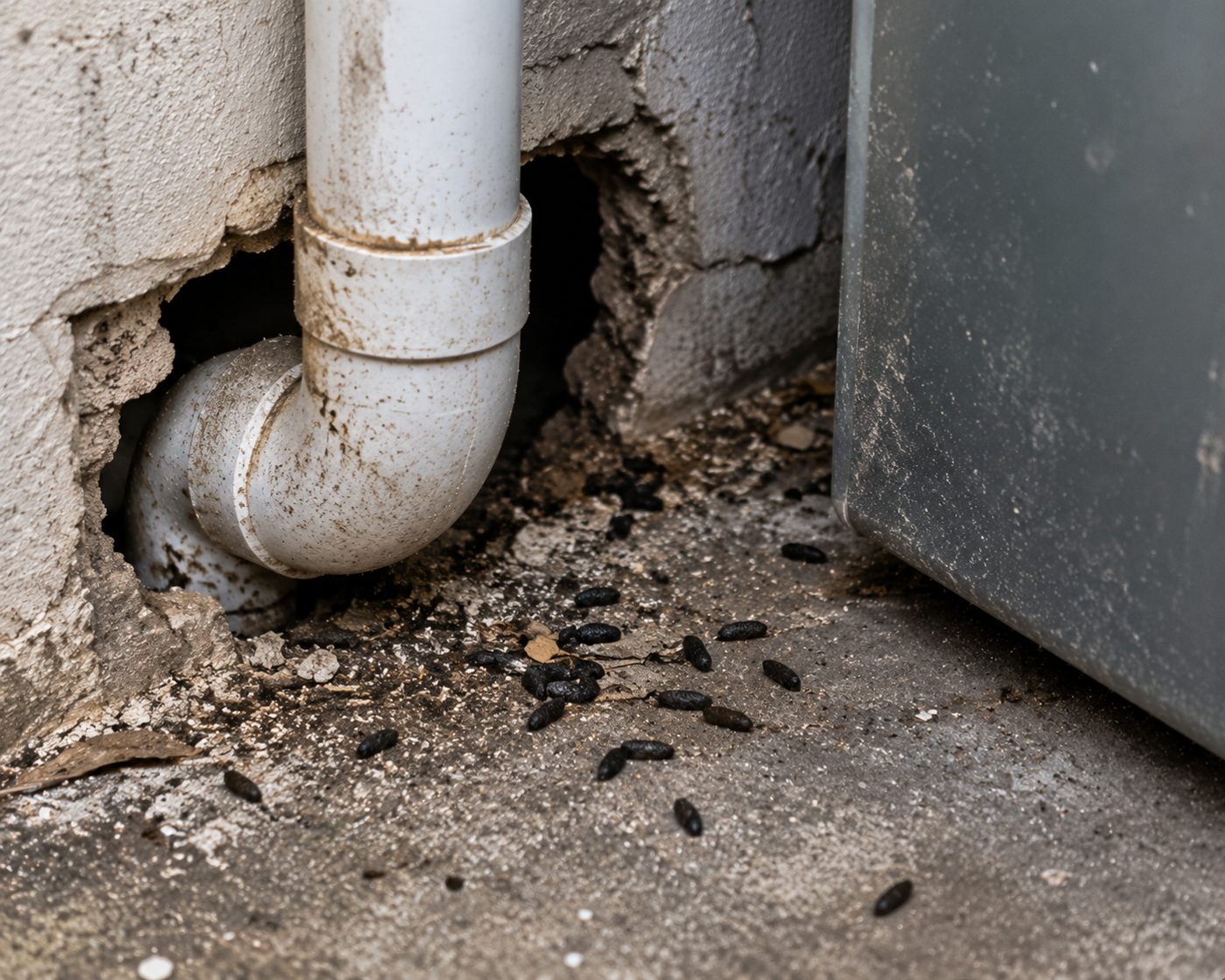
Shredded insulation, paper, fabric and dry garden material bundled in a roof void, in the back of a cupboard or under a bath. Outside: burrow holes near sheds, decking, compost and garden beds, disturbed pet food, and runways worn through grass along fence lines.
What to do next
- Put dry food and pet food into sealed hard containers.
- Keep bins closed and clear fallen fruit and spilled feed.
- Photograph what you find and note where and when — it speeds up the inspection.
- Don't scatter loose bait around the house, particularly with pets or children.
If the evidence points to rats, start with domestic rat control. If it points to mice, see mouse control. If you're not sure, a rodent inspection settles it.
Book a domestic rat inspection
Tell us what you're hearing or seeing at home. We inspect, trap and seal the entry points behind the problem.
Request an inspectionSame-day response available during operating hours, 7:00 AM – 6:00 PM